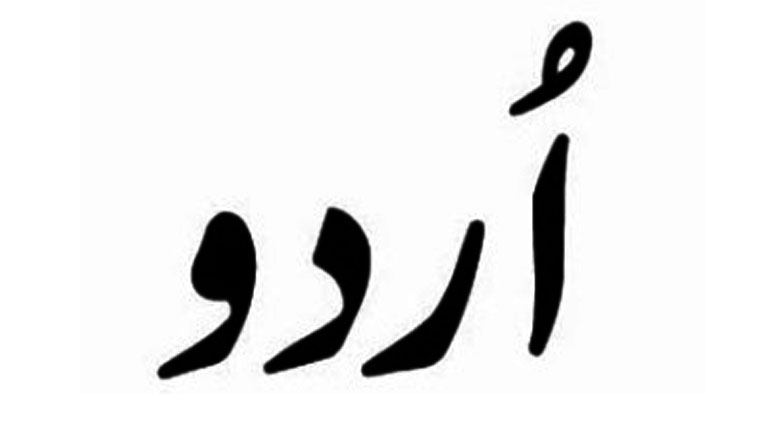
Hindi and Urdu are generally considered to be one spoken language with two different literary traditions. That means that Hindi and Urdu speakers who shop in the same markets have no problems understanding each other -- they'd both say yeh kitne kaa hay for 'How much is it? And the Urdu one will be یہ کتنے کا ہے؟ Hindi is written from left to right in the Devanagari script, and is the official language of India, along with English. Urdu, on the other hand, is written from right to left in the Nastaliq script and is the national language of Pakistan.

It's also one of the official languages of the Indian states of Bihar and Jammu & Kashmir. Considered as one, these tongues constitute the second most spoken language in the world, sometimes called Hindustani. In their daily lives, Hindi and Urdu speakers communicate in their 'different' languages without major problems.

Both Hindi and Urdu developed from Classical Sanskrit, which appeared in the Indus Valley at about the start of the Common Era. The first old Hindi poetry was written in the year 769 AD, and by the European Middle Ages it became known as 'Hindvi'. Muslim Turks invaded the Punjab in 1027 and took control of Delhi in 1193. They paved the way for the Islamic Mughal Empire, which ruled northern India from the 16th century until it was defeated by the British Raj in the mid-19th century. It was at this time that the language of this book began to take form, a mixture of Hindvi grammar with Arabic, Persian and Turkish vocabulary.

The Muslim speakers of Hindvi began to write in the Arabic script, creating Urdu, while the Hindu population incorporated the new words but continued to write in Devanagari script. The history of the Urdu language dates back to as early as the 12th century AD. Widely spoken and understood across the globe, it is the national language of Pakistan whereas English remains the official language of the state. By the 19th century, poetry written in Urdu was stimulated by socialist nationalist, pan-Islamic feeling, and writers and poets from the Punjab as well as the areas of Delhi and Lucknow began to contribute.

Urdu developed as local Indo-Aryan dialects came under the influence of the Muslim courts that ruled South Asia from the early thirteenth century. The official language of the Delhi Sultanate, the Mughal Empire, and their successor states, as well as the cultured language of poetry and literature, was Persian, while the language of religion was Arabic. Most of the Sultans and nobility in the Sultanate period were Persianized Turks from Central Asia who spoke Turkish as their mother tongue.

The Mughals were also from Persianized Central Asia, but spoke Turkish as their first language; however the Mughals later adopted Persian. Persian became the preferred language of the Muslim elite of north India before the Mughals entered the scene. Babur's mother tongue was Turkish and he wrote exclusively in Turkish. Muzaffar Alam, a noted scholar of Mughal and Indo-Persian history, suggests that Persian became the lingua franca of the empire under Akbar for various political and social factors due to its non-sectarian and fluid nature.

The mingling of these languages led to a vernacular that is the ancestor of today's Urdu. Dialects of this vernacular are spoken today in cities and villages throughout Pakistan and northern India. Cities with a particularly strong tradition of Urdu include Hyderabad, Karachi, Lucknow, and Lahore. Urdu, which was often referred to by the British administrators in India as the Hindustani language, was promoted in colonial India by British policies to counter the previous emphasis on Persian.
Urdu replaced Persian as the official language of India in 1837 and was made co-official, along with English. Before I post the map, I'm going to give a quick rundown on language in Pakistan. English and Urdu are the national languages, and are widely understood, at least by the educated. English, obviously, is nobody's first language in Pakistan, and Urdu is the first language of about 7% of the population, mostly descendents of immigrants from north India who arrived in 1947. The most widely spoken tongue by far is Punjabi, which is the first language of slightly less than half the population. When Saraiki and Hindko, two Punjabi dialects that are sometimes classified as separate languages, are included, well over half of Pakistanis speak Punjabi or a closely related language.

As anyone who read my post on the partition of Punjab will know, a large population of Punjabis live across the border in India. The second most widely spoken language is Pashto, which unlike Punjabi, an Indo-Aryan language related to Hindi, is an Iranian language. It is the dominant language in southern Afghanistan, but the majority of Pashtuns live in Pakistan. Right behind Pashto at 14% is Sindhi, which is a relative of Punjabi.

There are a few million Sindhi speakers in India as well, some right on the opposite side of the border, and some Hindus who fled Sindh after Partition. The other major regional language is Balochi, spoken by by about 4%. Balochi, like Pashto, is an Iranian language, though it is not particularly closely related.

It is actually closer to Kurdish, leading to the theory that the Baloch may have migrated to their current location fairly recently from the Middle East. Balochi is also spoken in southern Afghanistan and eastern Iran. There are some other minor languages, which I'll discuss later, but those are the major languages. Pakistan is considered to be a special country where many languages are spoken and here we have a Languages of Pakistan List. Every person knows that language shows the heritage, culture and identity of people. According to survey that almost 200 languages are spoken in Pakistan.

Since many years, the official language of Pakistan was the Persian. But before the British came, Urdu language was created or developed. Pakistan has many distinctive and different languages such as Urdu, Punjabi, English, Sindhi, Pashto and balochi.

Language is method of communication used by human to convey their ideas to other through speaking or writing. There are many languages are spoken in Pakistan like Shina, Balti, Khowar, Dhatki, Kashmiri, and many others but the major languages are Sindhi, Balochi, Saraiki, Pashto and Punjab. Languages vary place to place, province to province and person to person. Pakistan's national language is Urdu and almost every Pakistani either he belong to Sindh, or Punjab can speak Urdu. Each province has its own provisional languages which are consider as the symbol of that province.

Most of the languages which are spoken in Pakistan are from Indo Iranian origin. In this article you will learn about the major languages in Pakistan. Hopefully this map underscores how linguistically diverse Pakistan is, and possibly explains why the country is so fragmented.

Urdu Language Spoken In Pakistan Two other features worth noting are the huge swath of northern Balochistan that is Pashto speaking. It is also worth noting the tiny presence of Urdu, the national language. While most educated people in Pakistan can speak Urdu, and almost everyone has at least a rudimentary knowledge of it, very few people speak it as a first language.

Only the Sindhi cities of Hyderabad and Karachi are majority Urdu speaking. Punjab would have been a more logical destination given Lahore's traditional position as the most important city in northwest India, but Punjab was already overrun with Muslim refugees from India. Sindh wasn't partitioned, which means it had to absorb fewer refugees. That might explain why the powerful Urdu-speaking community chose the cities of this arid backwater province as their new home. Urdu is the national language of Pakistan and is spoken and understood throughout the country, where it shares official language status with English.
It holds in itself a repository of the cultural, religious and social heritage of the country. Although English is used in most elite circles, and Punjabi has a plurality of native speakers, Urdu is the lingua franca and is expected to prevail. Standard Urdu has approximately the twentieth largest population of native speakers, among all languages. It is the national language of Pakistan, as well as one of the twenty-three official languages of India. Urdu is often contrasted with Hindi, another standardized form of Hindustani.

Linguists nonetheless consider Urdu and Hindi to be two standardized forms of the same language. Now just because partition happened and some Muslim majority areas like Delhi were included in India, doesnt mean urdu is an Indian language. Urdu was developed by Pakistanis after partition as the national language because Pakistan was made for Muslims while Hindus adopted Hindi. Pakistan has produced countless urdu writers and poets and their number is way larger than that of Indian ones .

Even kids start writing poetry at something like matric in Pakistan. All my life I have seen WAY MORE people knowing urdu ghazals and poetry who had punjabi as their mother tongue than people who had urdu as their mother tongue.Urdu is our language and we should be proud of it. Urdu, Persian, Arabic, Turkish are few languages we must be proud of, as Muslims. They may not be our mother languages, but they are languages of Muslim culture and art.

Urdu is considered to be the national language of Pakistan and it is the perfect combination of many languages like Arabic, Persian and many local languages. If we talk about Sindhi language then it is spoken in the sindh province. According to survey that almost 26 million people speak Sindhi in Pakistan. Moreover, Sindhi language has 15 vowels and 47 consonant phonemes. Furthermore, in case of Pashto language, it is spoken in the province of North West Frontier Province.

Balochi language is spoken in the Baluchistan province and it is considered to be an Iranian language and it is much similar like Kurdish language. Apart from all these languages, English is considered to be an official language now a days. This language is used in order to communicate with other countries all over the world. Note that I colored the Saraiki and Hindko speaking areas shades of blue because it remains undetermined whether they are separate languages or dialects of Punjabi. Since I don't speak any of these languages, I can't make a determination for myself, so I split the difference by making them different shades of the same dark blue. One is the central Balochistan area, which is traditionally considered the Brahui zone.
It is Dravidian, which means that it is related to the major South Indian languages, such as Tamil and Telugu, but it is spoken far away from the other Dravidian languages. Another is that the Brahui learn both Balochi and Brahui and are equally comfortable in both, leading most to identify the dominant Balochi language as their native tongue. According to some sources, the Brahui have a complicated system of code-switching in which people use Brahui in some situations and Balochi in other situations. Apparently, even within families, there are some times Balochi is used , and other times Brahui is used .

The father speaks to the children in the language of the mother, and wives address their husbands in Balochi. This all seems crazy, but if true could explain why many Brahui would feel comfortable calling Balochi their native language. In any case, it seems that almost all Brahui are fluent in Balochi.

Just as a side note, Ethnologue say Brahui is spoken by four million people. This is a ludicrous number, implying that Balochistan, which has 7 million people, is majority Brahui-speaking. In Pakistan, Urdu is spoken and understood by a majority of urban dwellers in such cities as Karachi, Lahore, Rawalpindi/Islamabad, Abbottabad, Faisalabad, Hyderabad, Multan, Peshawar, Gujranwala, Sialkot, Sukkur and Sargodha. Urdu is used as the official language in all provinces of Pakistan. It is also taught as a compulsory language up to high school in both the English and Urdu medium school systems. This has produced millions of Urdu speakers whose mother tongue is one of the regional languages of Pakistan such as Punjabi, Hindku, Sindhi, Pashto, Gujarati, Kashmiri, Balochi, Siraiki, and Brahui.

Millions of Pakistanis whose mother tongue is not Urdu can read and write Urdu, but can only speak their mother tongue. SOON after the partition of the subcontinent into India and Pakistan, especially after India had taken Hindi as the official language, central leaders of Pakistan wanted Urdu to be the sole state language of entire Pakistan. This is a decision which had been strongly opposed by the people of East Pakistan.

With the utmost surprise of the history of the language movement, Urdu itself has never been the most widely spoken language of Pakistan till now. During the movement, it was the language of only 7 per cent of the total population of Pakistan while Bangla accounted for 54 per cent.The mother tongue of most of the West Pakistanis were Panjabi, Pashtu, Sindhi, Balochi and so on. Punjabi, Saraiki and Pashto are languages spoken in Punjab and Khyber PakhtunkhwaPunjabi, which often spelled as Panjabi, is counted among the most common Indo-Aryan languages in today's world. In Pakistan, Punjabi language is spoken by around 70 million souls, mostly in Punjab province. However, the status of the official language of Punjab is reserved for Urdu.
As spoken in both India and Pakistan, Punjabi is a language of many dialects. Written in Gurmukhi and Shahmukhi scripts, the dialects of the language doesn't have much difference between them and sound quite similar. Dialects of Punjabi spoken in India are Majhi, Doabi, Pwadhi and Malwi. However, in Pakistan, the chief dialects are Pothohari, Hindko, Majhi and Multani. Since Majhi is used to form the standard for writing in Punjabi, it is considered the most important dialect of Punjabi in the country. No region in Pakistan uses Urdu as its mother tongue, though it is spoken as the first language of Muslim migrants in Pakistan who left India after independence in 1947.
Other communities, most notably the Punjabi elite of Pakistan, have adopted Urdu as a mother tongue and identify with both an Urdu speaker as well as Punjabi identity. Urdu was chosen as a symbol of unity for the new state of Pakistan in 1947, because it had already served as a lingua franca among Muslims in north and northwest British India. It is written, spoken and used in all provinces/territories of Pakistan, and together with English as the main languages of instruction, although the people from differing provinces may have different native languages. Urdu is the sole national, and one of the two official languages of Pakistan . It is spoken and understood throughout the country, whereas the state-by-state languages are the provincial languages, although only 7.57% of Pakistanis speak Urdu as their first language. Its official status has meant that Urdu is understood and spoken widely throughout Pakistan as a second or third language.
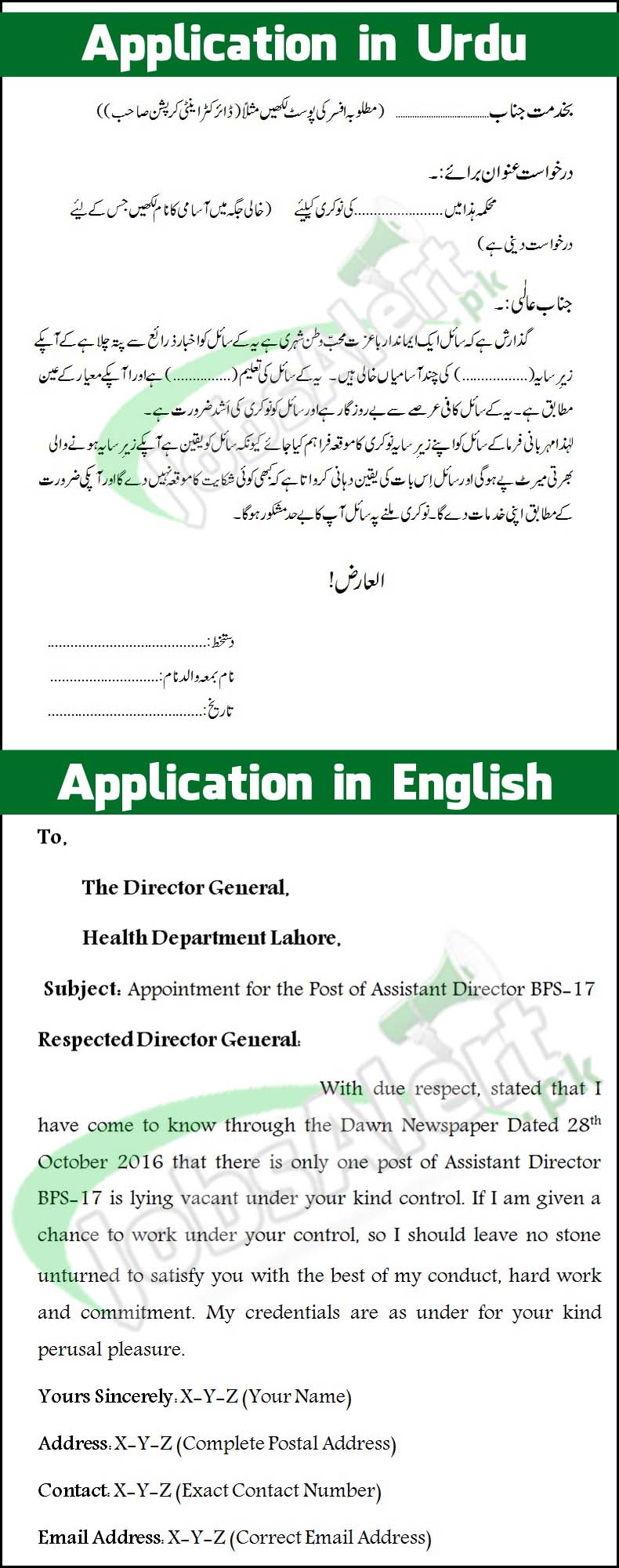
It is used in education, literature, office and court business, although in practice, English is used instead of Urdu in the higher echelons of government. Article 251 of the Pakistani Constitution mandates that Urdu be implemented as the sole language of government, though English continues to be the most widely used language at the higher echelons of Pakistani government. For 8 hundred years it was the official language of Indian Muslim states.

Lord Macauly banned Farsi to cut off relations of Indian Muslims with Afghanistan, Turkistan, Iran and Turkey and imposed Indian vernacular Hindi/Urdu which was one and the same language before British occupation. Moreover Urdu is not the mother tongue of any native ethnic group or region of Pakistan. If we want to ged rid of Indian culture of Bollywood, we must revert to our Historical Language Farsi in which our fore fathers were educated. They used to learn, speak and write in Farsi instead of Urdu or any other Indian language. English is the second co-official language with Urdu which spoken in Pakistan.